
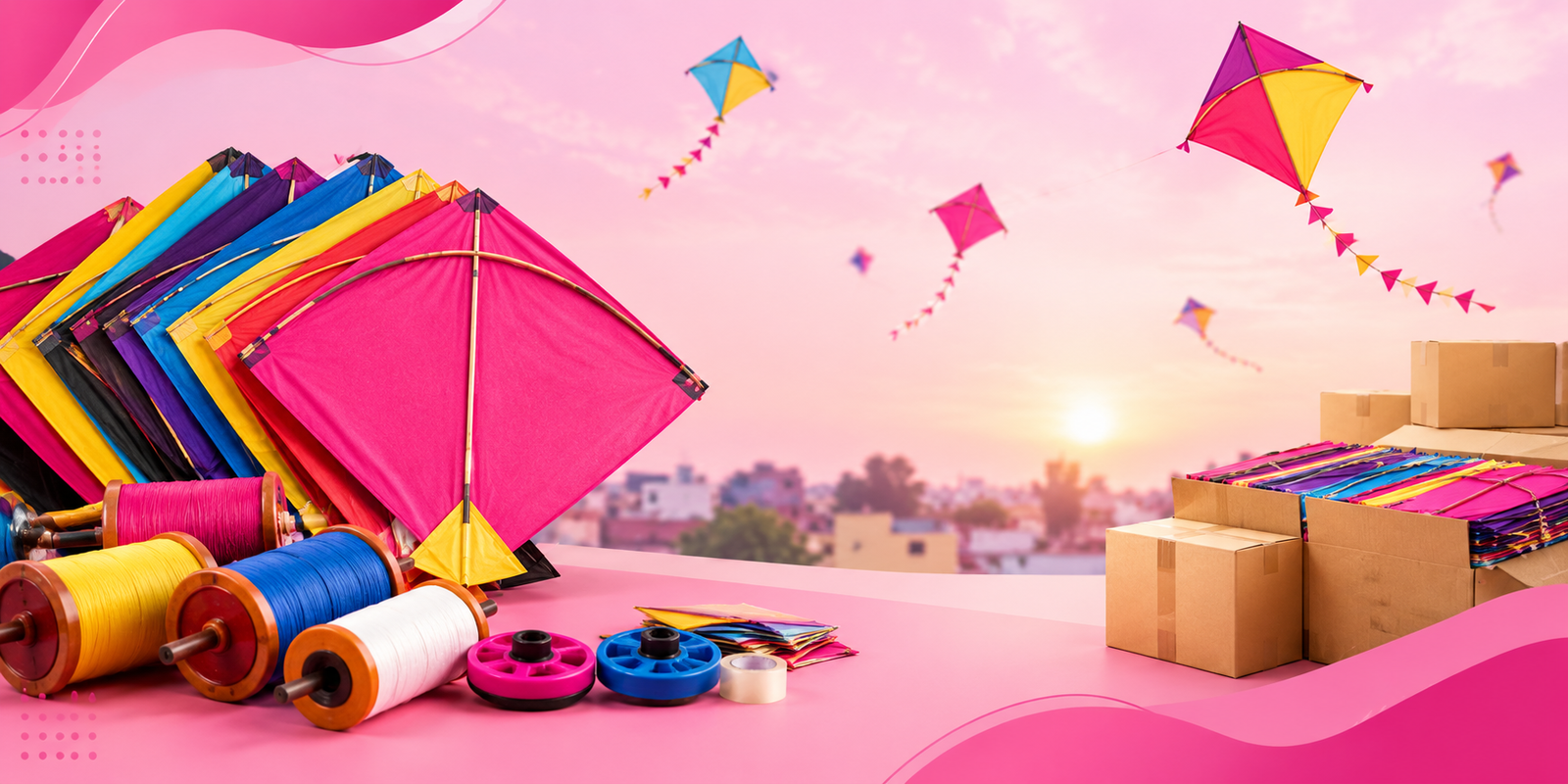
If you are a shop owner, festival-season seller, or online reseller exploring the kite wholesale market, choosing the right stock is only the first step. You also need a reliable bulk kite supplier who can meet your quality, price, and delivery needs. In addition, a clear buying plan can help you avoid stock problems and protect your profit during busy festival periods. This guide covers stock selection, supplier checks, wholesale orders, pricing, and basic compliance.
How Do You Choose the Right Stock From the Kite Wholesale Market?
Quick answer:
Start with fast-moving paper and plastic fighter kites for volume sales. Then, add a smaller selection of premium kites such as ripstop nylon, delta, or box kites. Finally, keep kite string and other accessories as separate bulk items because customers often buy them again during the season.
A balanced stock plan can help retailers serve different types of buyers. For example, you can divide your order into these three groups:
• 60–70% budget and fighter kites — These offer low-cost options for children and festival buyers.
• 20–25% mid-range kites — These products can attract enthusiasts and customers looking for better materials.
• 10–15% premium and novelty kites — Delta, box, and character-shaped kites can add variety and support higher selling prices.
What Types of Kites Should Retailers Stock?
Retailers can benefit from carrying several kite styles instead of relying on one product type. Each category attracts a different buyer, so a mixed collection can make your shop more useful during the festival season.
• Paper fighter kites — These are affordable and popular with children and festival crowds.
• Plastic or poly fighter kites — These offer more durability than basic paper kites and can suit windy conditions.
• Ripstop nylon kites — These are useful for stunt and dual-line flying and can attract hobbyists.
• Delta and box kites — These designs are easy to understand and can work well for beginners and gifting.
• Character and novelty kites — Bright shapes and printed designs can attract children and impulse buyers.
• Kite accessories — Reels, string, and repair tape can increase the value of each customer purchase.
Kite Types Compared — Best for Retail Resale
The following comparison can help retailers decide which products deserve more space in their stock.
| Kite Type | Typical Buyer | Price Point | Margin Potential | Stocking Priority |
|---|---|---|---|---|
| Paper fighter kite | Kids and festival crowds | Low | Low-medium | High |
| Plastic fighter kite | General buyers | Low-medium | Medium | High |
| Ripstop nylon stunt kite | Hobbyists | Medium-high | High | Medium |
| Delta kite | Beginners and gift buyers | Medium | Medium-high | Medium |
| Box kite | Enthusiasts | Medium-high | High | Low-medium |
| Character and novelty kite | Children and impulse buyers | Low-medium | Medium | Medium |
How Do You Find a Reliable Bulk Kite Supplier?
Quick answer:
A reliable supplier should provide samples, clear MOQ details, volume-based prices, material information, and clear payment and delivery terms. More importantly, the supplier should be willing to discuss these details before you place a large order.
Before choosing a supplier, follow these simple checks:
1. Request samples — Ask for physical samples or clear photos and videos of the exact kite you plan to buy.
2. Compare tiered prices — Ask for prices at different quantities and get the final terms in writing.
3. Check the frame material — Bamboo is common and affordable, while fibreglass can offer better durability.
4. Confirm packaging — Proper packing helps reduce bending and frame damage during transport.
5. Verify the business — For Indian wholesale trade, checking GST and business details can provide more confidence when building a long-term supplier relationship.
What to Check Before Placing Wholesale Kite Orders
Before finalising wholesale kite orders, discuss the main terms with your kite wholesaler. This step can help prevent unexpected costs later.
• Unit price — Confirm the price for your exact order quantity. Larger quantities may qualify for better rates.
• Lead time — Check how long the supplier needs to prepare and dispatch your order.
• Return or replacement policy — Ask how damaged or defective products will be handled.
• Shipping and packaging cost — Kites are light but can take up considerable space, so freight can affect the final cost.
• Sample approval — For custom or printed kites, approve the sample before the main order is produced.
What Is a Typical Minimum Order Quantity (MOQ) for Kite Wholesale Orders?
MOQ depends on the supplier, product type, design, and order size. Therefore, it is better to confirm the exact requirement before comparing wholesale offers.
| Kite Category | Typical MOQ Range |
|---|---|
| Basic paper or plastic fighter kites | 500–1,000 units |
| Mid-range delta or box kites | 100–300 units |
| Premium or custom-printed kites | 50–100 units |
| Kite string or manja bulk rolls | 50–200 rolls |
For a new retailer, a smaller trial order can be a practical starting point. Although the per-unit price may be higher, testing demand first can reduce the risk of holding slow-moving stock.
Kite String and Manja — What Retailers Need to Know Before Stocking
Kite string needs extra attention because some types are restricted in different parts of India. Glass-coated and certain synthetic strings can create safety risks for people, birds, and power infrastructure. Rules can also vary by state and local authority.
• Check the material — Ask your supplier whether the string is cotton-based and whether it contains glass, metal, or synthetic material.
• Check local rules — Before buying in bulk, review the current restrictions that apply in your state or area.
National Green Tribunal
orders can also be checked for relevant updates.
• Avoid restricted products — Do not stock or resell string that is prohibited in your area, even when a supplier offers it at a low price.
Seasonal Demand Planning — When to Order From a Kite Wholesaler
Kite demand changes throughout the year. As a result, retailers should plan orders well before the main festival rush instead of waiting until the last few weeks.
• Makar Sankranti and Uttarayan — These festivals create strong demand in many parts of India, so retailers should plan stock several weeks in advance.
• Independence Day — Tricolour and themed kites can see higher interest around August 15.
• Basant Panchami and regional festivals — Local celebrations can create smaller demand opportunities depending on the market.
Ordering early can provide more time to compare suppliers, arrange transport, and replace damaged stock. In addition, early planning can reduce the chance of running out of popular designs during the busiest days.
How Do You Price Kites for Resale After Buying Wholesale?
Quick answer:
Retail pricing should be based on your total landed cost rather than the supplier’s unit price alone. Your calculation should include the product price, freight, packaging, and other applicable costs. After that, compare the final cost with local market prices.
When setting your resale price, consider the following:
• Landed cost per unit — Add the wholesale price, shipping, packaging, and any applicable charges.
• Local market rates — Compare similar kite designs and quality levels in your area.
• Bundle pricing — Combining a kite with a reel and suitable string can increase the value of a customer’s purchase.
Red Flags to Avoid When Choosing a Kite Wholesaler
A low price does not always mean a good wholesale deal. Before sending a large payment, look for these warning signs:
• The supplier refuses to provide samples before a bulk order.
• MOQ or pricing keeps changing without a clear reason.
• There is no clear policy for damaged or defective products.
• The seller pressures you to make a full payment through an untraceable method.
• The seller offers restricted kite string without clearly explaining its material.
Frequently Asked Questions
What is a good starting order size for a new kite retailer?
A trial order of around 100–300 basic kites can help a new retailer test customer demand. However, the exact quantity depends on the supplier, product, and local market.
Are paper kites or plastic kites better for resale?
Paper kites are usually affordable and can sell well during festivals. On the other hand, plastic kites can offer better durability and may suit customers looking for a longer-lasting option.
How much does shipping typically add to wholesale kite orders?
Shipping costs depend on order size, distance, packaging, and transport method. Since kites can be light but bulky, always ask for the complete delivered cost before choosing a supplier.
Is it legal to sell all types of kite string in India?
No. Certain glass-coated and synthetic kite strings are restricted or banned in different areas. Therefore, retailers should check the current local rules and choose compliant string.
How do I know if a bulk kite supplier is trustworthy before a large order?
First, check the supplier’s business details and request samples. Next, compare pricing and delivery terms. Finally, consider a smaller trial order before placing a large wholesale kite order.
Final Thoughts
A strong wholesale buying plan starts with the right product mix and a reliable supplier. By comparing quality, MOQ, delivery terms, and total cost, retailers can make better stock decisions. In the end, a balanced order from the kite wholesale market can be more valuable than simply choosing the lowest per-unit price.